Punjab writes new chapter in employee welfare as Bhagwant Mann Govt ends contractual system; over 65,000 employees to be regularised
– Historic Cabinet decision removes contractors from govt employment structure, guarantees direct state employment & pathway to permanent jobs
– Punjab Cabinet also approves reconstituted panel on DA arrears & nods seven special anti-corruption courts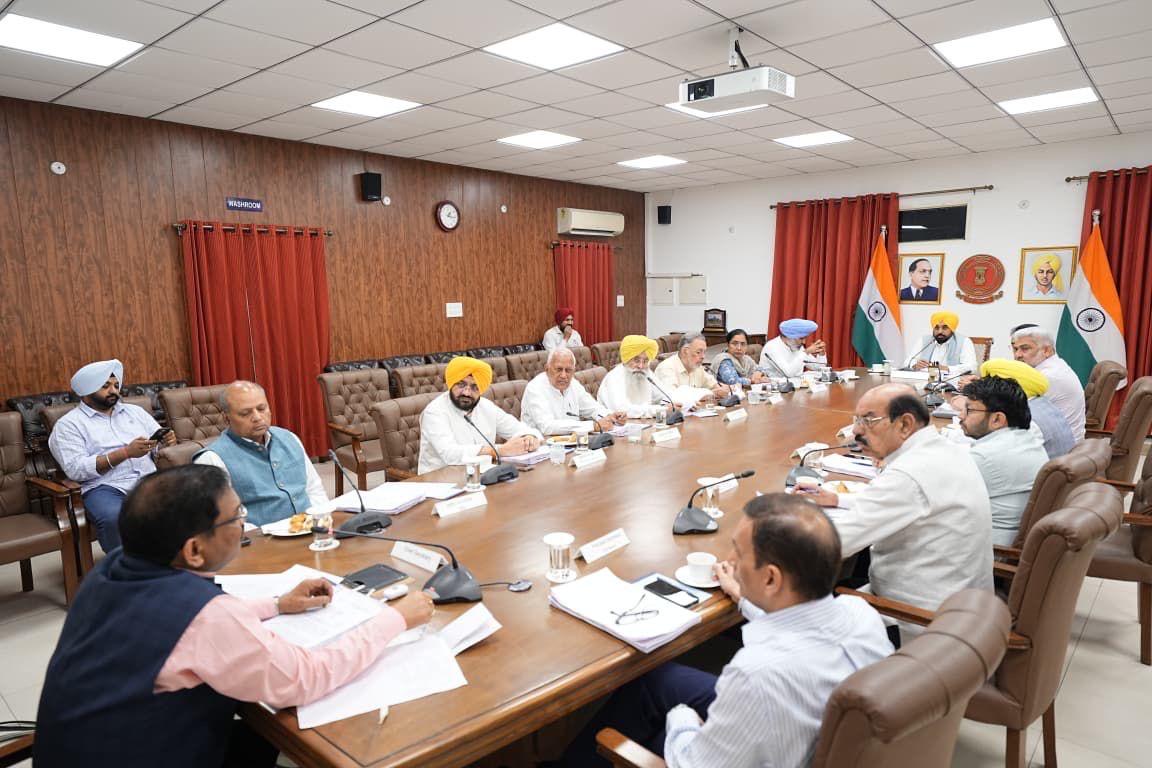
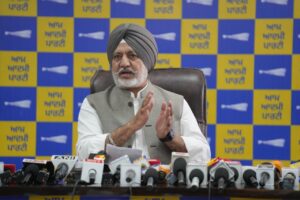
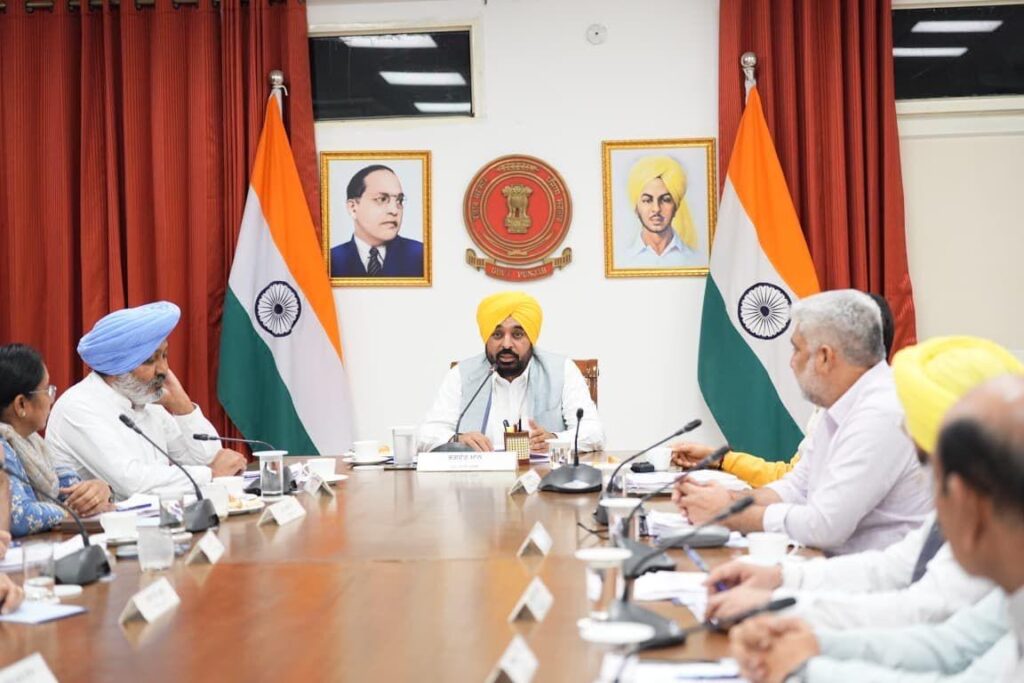
(Rajinder Kumar) CHANDIGARH, 30th May 2026: The Punjab Cabinet led by CM Bhagwant Singh Mann on Saturday delivered one of the most far-reaching pro-employee decisions in Punjab’s history, approving a roadmap to dismantle the decades-old contractual employment system and pave the way for the regularisation of more than 65,000 workers across government departments. By ending the role of private contractors in government employment and creating a direct employer-employee relationship between the state and workers, the Bhagwant Mann Government has moved to provide job security, dignity and a clear pathway to permanent service for thousands of employees who have spent years serving Punjab without regular status.
The Cabinet also approved two new ordinances to implement the transition, reconstituted a ministerial panel to address pending Dearness Allowance (DA) and pension-related dues, and cleared the establishment of seven exclusive special courts for the speedy trial of corruption cases.
Sharing details of the decision, the Chief Minister’s Office stated that it has approved the repeal of the Punjab Adhoc, Contractual, Daily Wage, Temporary, Work Charged and Outsourced Employees’ Welfare Act, 2016, and cleared the Punjab State Outsourced Personnel (Transition to Contractual Engagement) Bill, 2026 and the Punjab Contractual Personnel (Absorption Against Sanctioned Vacancies) Bill, 2026. The move paves the way for bringing outsourced employees directly under the government and creating a clear pathway towards regular employment.
CM Bhagwant Singh Mann stated, “More than 65,000 contract workers of Punjab have given the best years of their lives in the service of the state. With this decision, Punjab has returned to them what is rightfully theirs. No contractor will now stand between these employees and the state.”
Explaining the reform, CM Bhagwant Singh Mann said, “These employees will now have direct employment, full dignity and a clear pathway to permanence. Workers presently engaged through private contractors in Punjab Government departments and entities will be taken directly into the state’s own employment, eliminating the middleman contractor system.”
The Chief Minister stated that under the Punjab State Outsourced Personnel (Transition to Contractual Engagement) Bill, 2026, outsourced Group C and Group D employees who have completed five years of continuous service will be brought directly under government contractual employment. Employees working in hazardous categories will become eligible after completing three years of service.
CM Bhagwant Singh Mann said, “Direct state employment will be provided after five years of continuous outsourced service. Thereafter, after completing ten years of contractual service, employees will be considered for absorption against regular sanctioned posts. Two new legal frameworks are being brought in, one for moving from outsourced employment to direct state contract and another for moving from state contract to the regular cadre against sanctioned vacancies.”
Highlighting the scale of the initiative, CM Bhagwant Singh Mann said, “A total of 65,048 outsourced workers across 51 departments fall within the ambit of this reform and more than 26,000 workers will be among the first beneficiaries.”
He further announced that workers performing duties involving risks to life and health will receive faster consideration under the policy.
CM Bhagwant Singh Mann said, “Workers whose daily duties involve danger will be considered after three years instead of five years. These include Fire Services personnel, PSPCL linemen, sewer workers, sanitation workers of Urban Local Bodies, waste-handling workers and field complaint staff.”
Detailing the departments that will benefit, the statement added reform covers 15,753 workers in the Power sector, including complaint-handling staff, PESCO employees, meter readers and nodal centre workers; 8,436 workers of Local Government departments, primarily sanitation staff; 8,373 workers in Cooperative institutions including sugar mills, Spinfed and Markfed; 7,704 workers in School Education; 4,746 workers in the Transport Department; and 1,472 outsourced fire personnel.
In addition, 2,688 workers of Health and Family Welfare, 1,575 workers of Water Supply and Sanitation, 1,533 workers of Agriculture, 1,311 workers of Jails, 1,251 workers of Technical Education, 1,570 workers of PWD (B&R), 1,322 workers of General Administration and 1,231 workers of Medical Education will also benefit from the reform.
CM Bhagwant Singh Mann said, “Workers will now have a direct employer-employee relationship with the state. Contractors will no longer exist in this arrangement.”
The Chief Minister further said, “Wages will be credited directly into employees’ bank accounts without any agency deductions or commissions. Employees will receive statutory maternity benefits and ten days of casual leave every calendar year. They will also be covered under biometric attendance and iHRMS systems.”
Emphasising employee protections, CM Bhagwant Singh Mann said, “There will be transparency and protection from arbitrary action. No worker will be removed without reasons being recorded in writing and without being given an opportunity to be heard.”
The Chief Minister said the implementation process would begin within 45 days of Cabinet approval and eligible categories would be notified in phases by the Departments of Personnel and Finance.
CM Bhagwant Singh Mann said, “A state-level Empowered Committee headed by the Chief Secretary will monitor implementation of this decision. While many states are moving towards greater contractualisation, Punjab is reversing that trend and ending the contractual system.”
*Cabinet reconstitutes panel to examine DA and pension arrears*
In another important decision, the Cabinet granted ex-post facto approval for the reconstitution of a Cabinet Sub-Committee comprising Finance Minister Harpal Singh Cheema, Cabinet Minister Aman Arora and Cabinet Minister Dr Baljit Kaur to examine issues related to pending arrears of revised pay, pensions, leave encashment and Dearness Allowance.
The committee will consider payment of arrears arising from revised pay and pension benefits between January 1, 2016 and June 30, 2021, besides examining pending DA and Dearness Relief dues from July 1, 2021 to March 31, 2024. The committee will also study issues related to Dearness Allowance and Dearness Relief for various categories of employees and pensioners.
*Seven exclusive special courts approved for speedy corruption trials*
To ensure faster disposal of corruption cases under the Prevention of Corruption Act, 1988, the Cabinet approved the establishment of seven Exclusive Special Courts across Punjab.
Three courts will be established in SAS Nagar, while one court each will be set up in Jalandhar, Ludhiana, Amritsar and Patiala. The Cabinet also approved the creation of seven posts of Additional District and Sessions Judges along with 63 supporting staff positions for the functioning of these courts.
*Amendment approved in Punjab Superior Judicial Service Rules*
The Cabinet also approved amendments to Rules 7, 10, 12 and Appendix ‘B’ of the Punjab Superior Judicial Service Rules, 2007.
The proposed amendments are aimed at providing promotion-related benefits to serving superior judicial officers in Punjab and are expected to strengthen career progression opportunities within the state’s judicial services.
About The Author